
 Here's My Church
 The 3am text
It started with a text from one of my best friends at 3am on a Sunday: “A map of every Christian church in the US would be pretty interesting to see.” I agreed, so I started to build. The spark had a spark, too—a couple weeks earlier I’d made an interactive world-conflict map in Figma Make for fun, so I knew exactly what the tooling could do. Swap the dataset, and 48 hours later a church directory existed: idea, name, domain, data, and announcement, all inside a weekend.
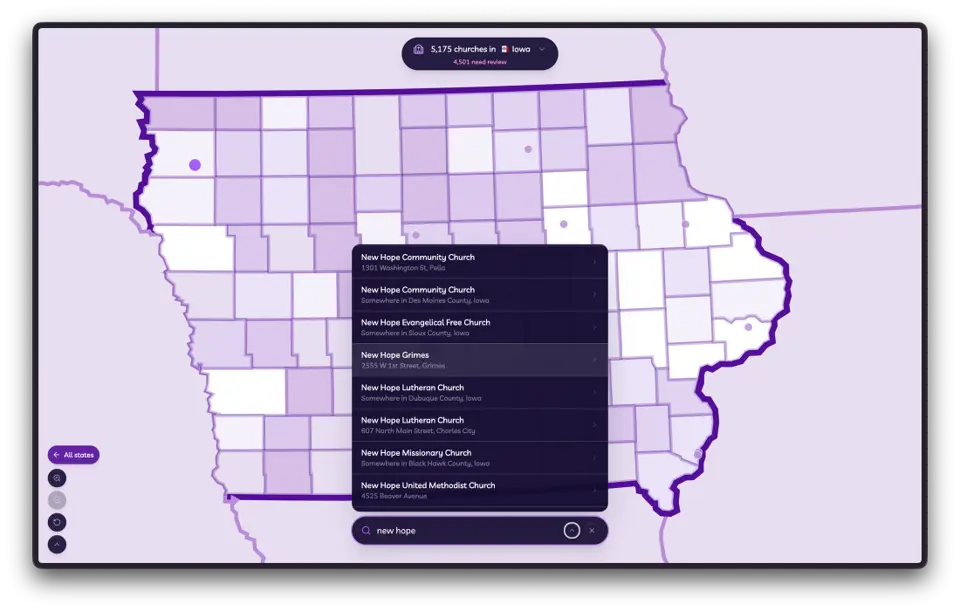
Data does the design
The surprise wasn’t building the map—it was that no comprehensive, well-designed church directory existed. So the design work became data work: OpenStreetMap locations cross-referenced with U.S. Census and denomination records, all free and public. Attendance estimates were the fun part—building square footage, portioned down to a sanctuary and shrunk below full capacity, gave 40–50% of churches a realistic weekly number instead of a guess. Not perfect, but honest about what it is.
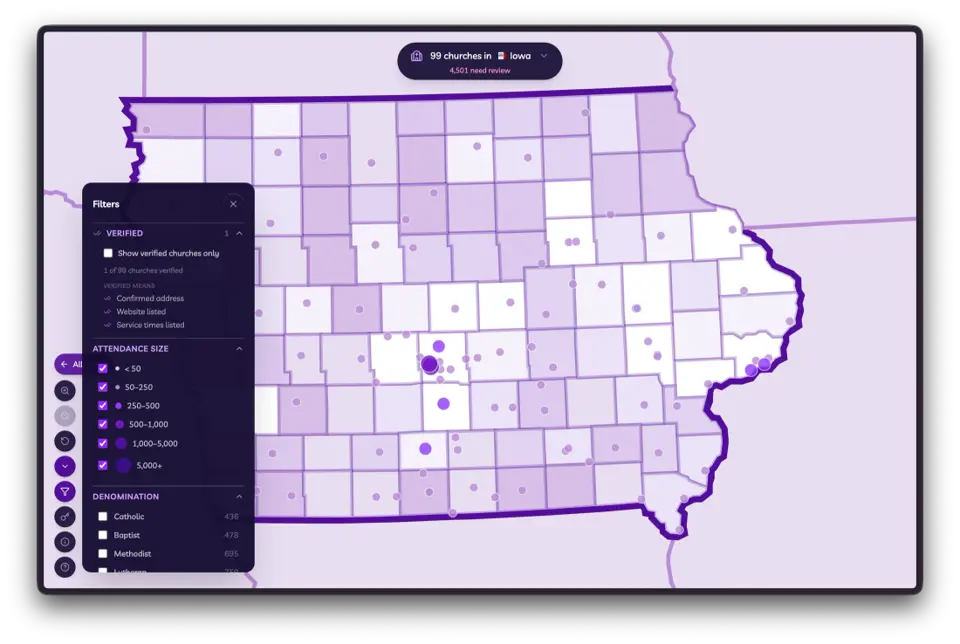
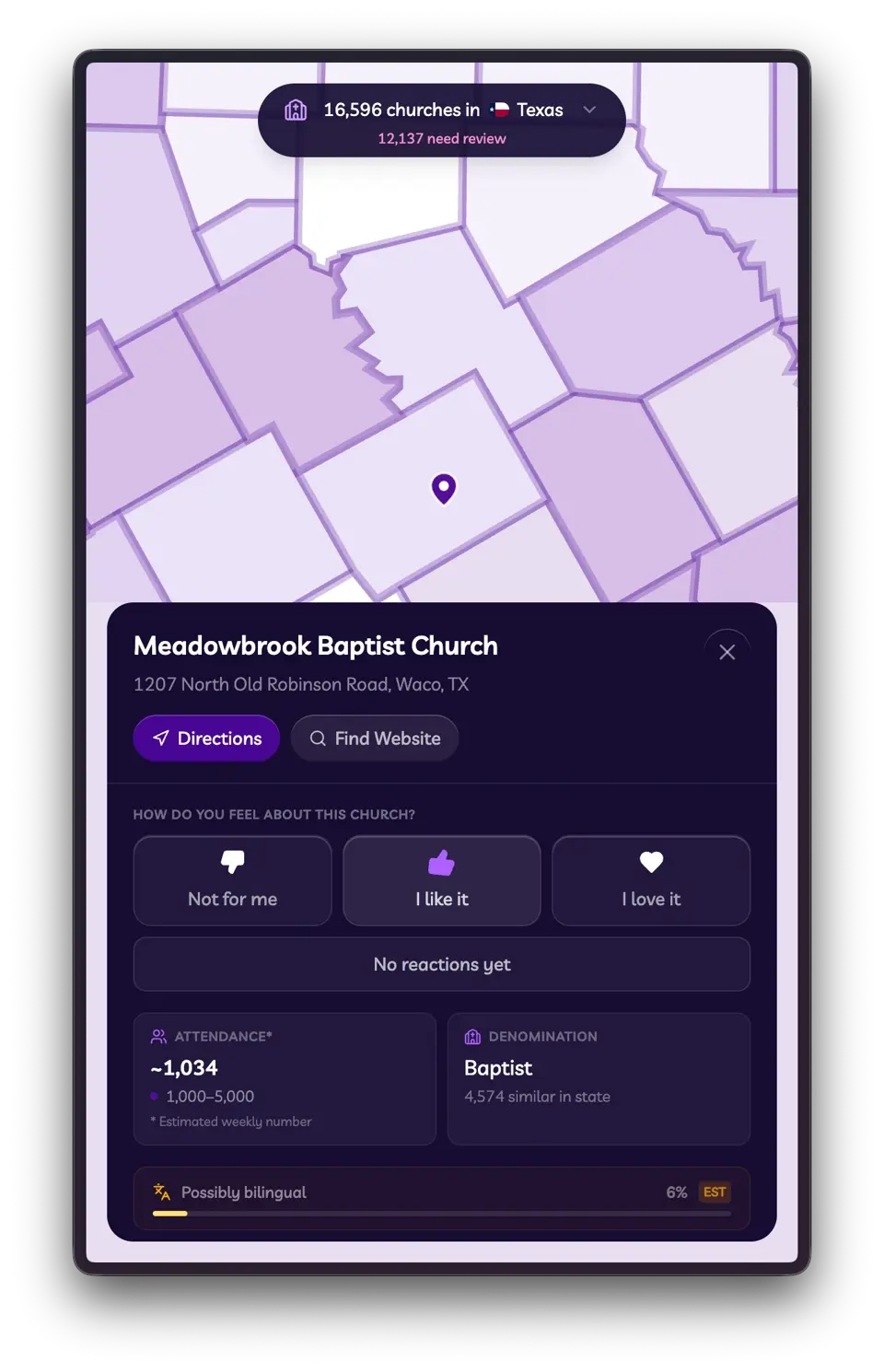
Kept accurate by strangers
Church directories rot because updating them is a chore. Here’s My Church makes corrections anonymous—no account, just fix the field—and keeps the crowd honest with a review queue: every proposed change gets human eyes before it lands. 1,640 corrections and 74 churches improved so far, from people who just wanted the map to be right.
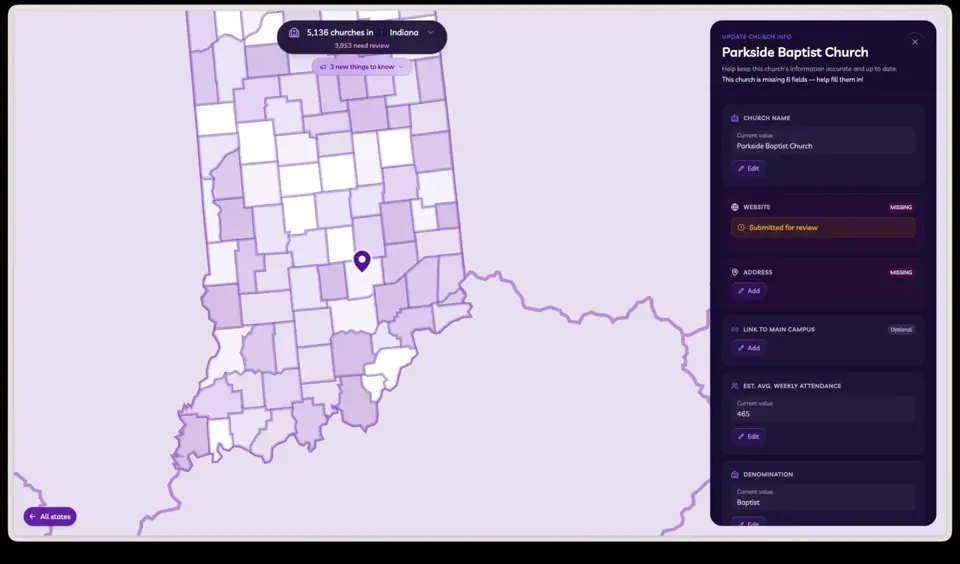
Where it stands
Over 244,000 churches across all 50 states—about one church per 1,368 people. It’s free, open source, and maintained: I steward the data and the map, and the crowd keeps it honest.
Tools & process
Claude
First pass of the interactive map and visual system in a prompt-driven visual build, then carried forward into production code.
React
SVG-based map UI with Motion for animation and Lucide for icons (not a generic embedded map widget); Vite for the production bundle.
Supabase
Backing database for church records and crowd-sourced corrections.
OpenStreetMap, Census & denomination sources
Blending free location and attribute data; attendance estimates refined with building footprint logic where available.
Product & data
Modeling what “accurate church data” means in the UI, review flows for edits, and ongoing stewardship of the map experience.